Thank you for buying this record. What follows is its documentation: the
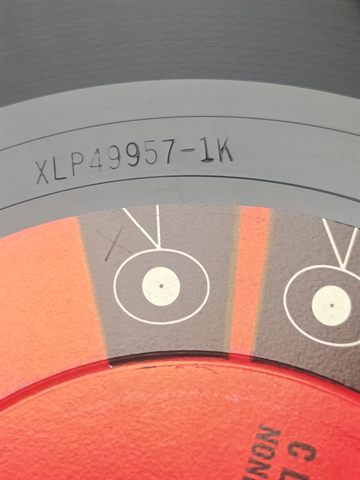
pressing identified, the matrix / runout transcribed by hand from the dead
wax, and the condition as assessed before it was listed. It is yours to keep
with the record.
— Paul, Vinyl Curator
Miles Davis
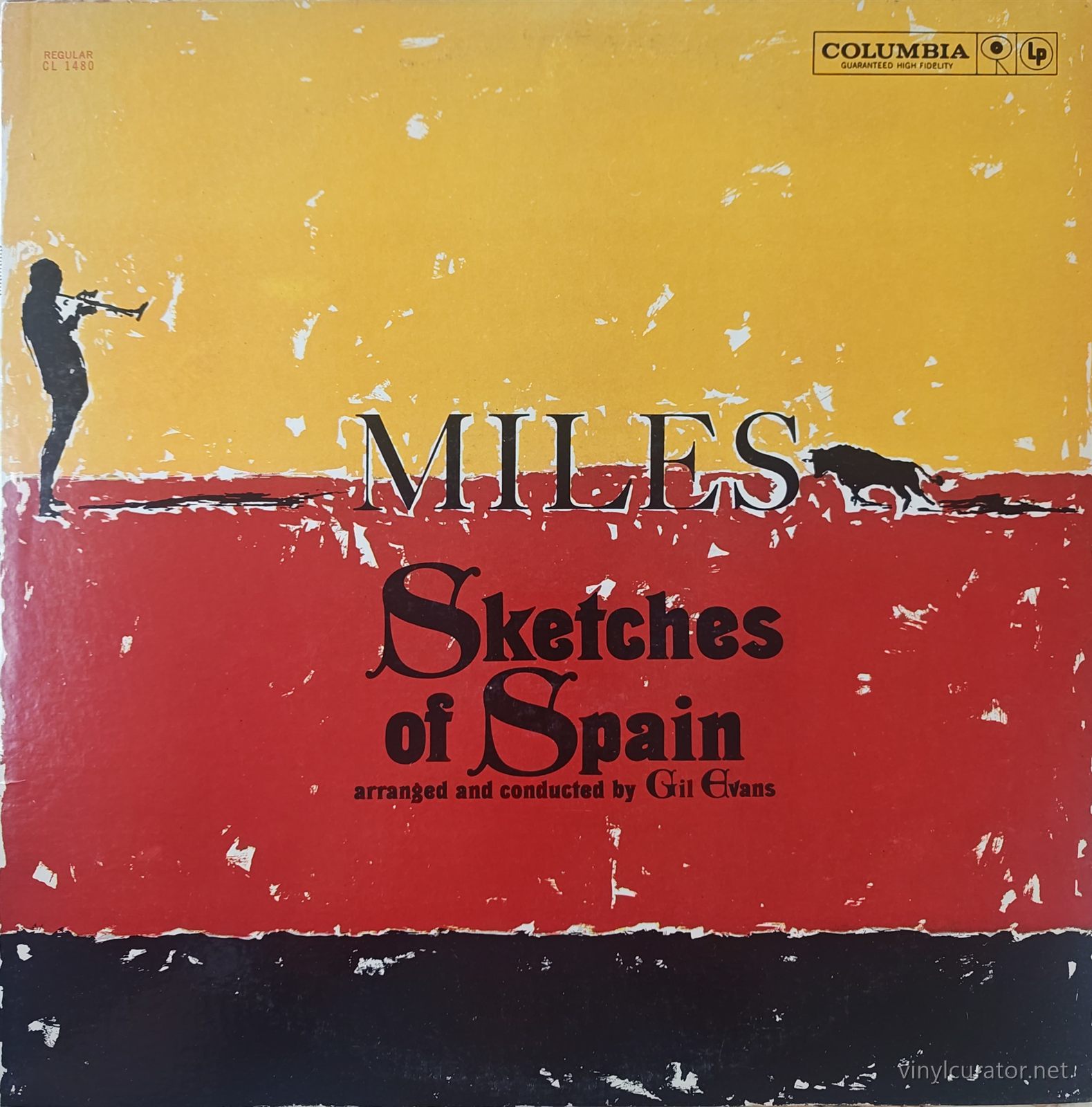
Sketches of Spain (1960 first pressing)
1960 · Columbia CL 1480 · Mono · US · LP · 33 1/3 RPM
Pressing details
| Label | Columbia |
|---|
| Catalogue number | CL 1480 |
|---|
| Year | 1960 |
|---|
| Mono / Stereo | Mono |
|---|
| Country | US |
|---|
| Format | LP |
|---|
| Speed | 33 1/3 RPM |
|---|
| Genre | Jazz - Third Stream/Orchestral Jazz |
|---|
| Producer | Teo Macero, Cal Lampley |
|---|
| Conductor | Gil Evans |
|---|
| Performer / Orchestra | Gil Evans Orchestra |
|---|
| Musicians | Miles Davis (trumpet, flugelhorn), Gil Evans (arranger, conductor), Elvin Jones (drums, percussion), Jimmy Cobb (drums), Paul Chambers (bass), Jose Mangual (percussion), Johnny Coles, Bernie Glow, Louis Mucci, Ernie Royal, Taft Jordan (trumpets, varying by session), Bill Barber (tuba), Danny Bank (flute, clarinet, bass clarinet), Romeo Penque, Eddie Caine, Al Block, Harold Feldman (woodwinds), Jack Knitzer (bassoon), Earl Chapin, Tony Miranda (French horn), personnel varying somewhat between the November 1959 and March 1960 sessions per Columbia session files |
|---|
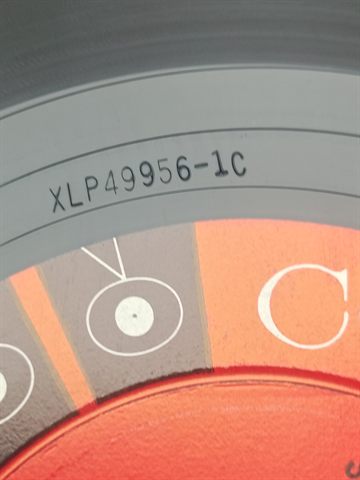
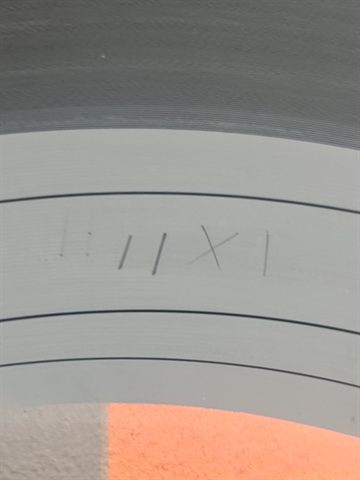
Matrix / Runout
Side A:  XLP49956-1C
Side B:  XLP49957-1K
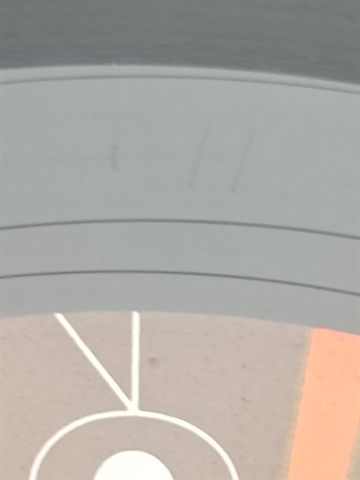
Condition
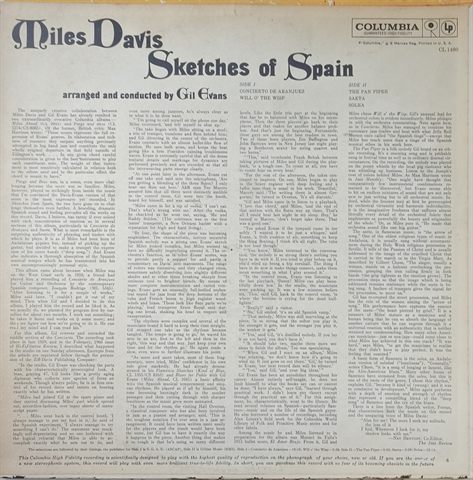
- Cover
- VG+
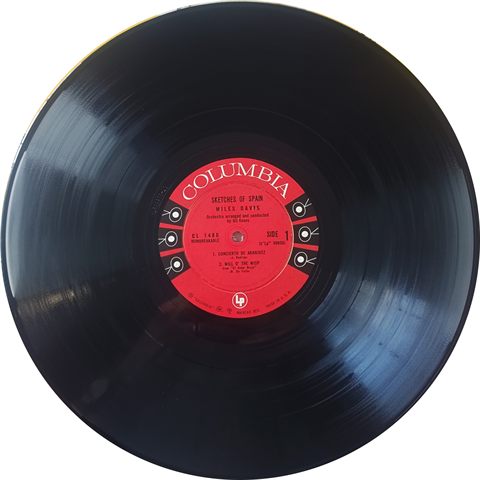
- Vinyl
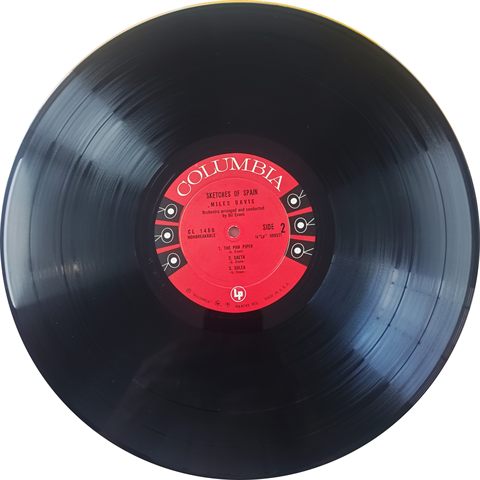
- NM 6 EYE DEEP GROOVE/NM 6 EYE DEEP GROOVE
Variant chronology
1960 - US Columbia "6-eye" mono, deep groove, full (unabbreviated) orchestra credit, Terre Haute/unidentified plant  <- this copy
1961-62 - US Columbia "6-eye" mono, flat edge (deep groove phased out), abbreviated orchestra credit variants
1963-65 - US Columbia "Guaranteed High Fidelity" 2-eye mono reissue, CBS-era labels
1965+ - US Columbia "360 Sound" mono/stereo reissue (Pitman)
1970s-80s - US Columbia orange-label reissue
This Pressing
1st press (mono, 1960) - Columbia six-eye deep-groove label, full orchestra credit, regular-size side numerals (Discogs earliest six-eye sub-variant).
The Album
Sketches of Spain grew out of the extraordinary collaborative partnership Miles Davis had already forged with arranger Gil Evans on Miles Ahead and Porgy and Bess, and it pushed that partnership furthest into orchestral, Spanish-tinged territory. The centerpiece, an adaptation of Joaquin Rodrigo's "Concierto de Aranjuez," originated when Davis heard a recording of the concerto's adagio and asked Evans to rework it as a feature for his trumpet against a large studio orchestra rather than a working jazz combo. Recorded in New York across sessions in November 1959 and March 1960, the album folds flamenco-inflected themes, bullfight and Holy Week processional imagery (as on "Saeta" and "Solea"), and material drawn from Manuel de Falla into Evans's dense, coloristic orchestration, with Davis's trumpet and flugelhorn functioning almost as a classical soloist floating over shifting orchestral textures rather than trading bebop lines. It arrived at a pivotal moment in Davis's career, sandwiched between the hard-bop and modal breakthroughs of Milestones and Kind of Blue and his later electric period, and it confirmed Evans and Davis as jazz's foremost orchestral colorists outside the big-band tradition. The record was a critical and commercial success on release, widely praised for its atmosphere and for Davis's uniquely vocal, vibrato-laden trumpet tone, and it won a Grammy for Best Jazz Composition. It remains one of the most acclaimed "third stream" recordings in jazz history and a touchstone for orchestral jazz, cited by critics as a high point of both Davis's and Evans's catalogs and a work that expanded the vocabulary of what a jazz album could sound like.
Tracklist
Side 1
1. Concierto de Aranjuez
2. Will O' The Wisp
Side 2
1. The Pan Piper
2. Saeta
3. Solea
The Label
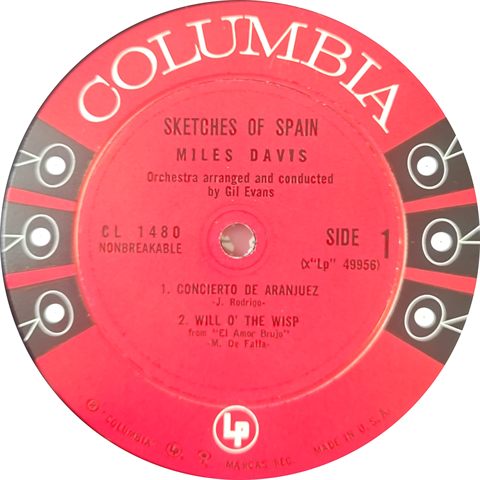
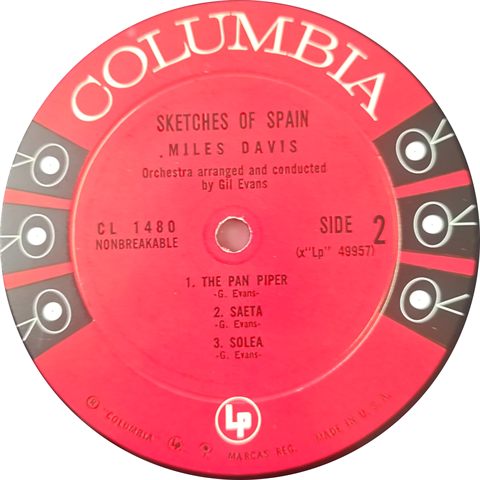
This copy carries the original Columbia "six-eye" mono label (red field, arched COLUMBIA logo, six "eye" logos in the trim ring, "NONBREAKABLE" beneath the catalog number) with a deep-groove ring on the label side, the configuration bsnpubs/LondonJazzCollector place in Columbia's 1958-1961 six-eye deep-groove era. The orchestra credit is spelled out in full ("Orchestra arranged and conducted by Gil Evans") rather than abbreviated, and the side indicators use regular, equal-sized capitalization ('SIDE 1' with '1' not enlarged) - textual details Discogs uses to identify the earliest "six-eye" label sub-variant of CL 1480 (catalogued on Discogs as the "Terre Haute Pressing"/unidentified-plant first variant), as distinct from later six-eye pressings with abbreviated orchestra credit and enlarged side numerals. This label configuration, combined with the deep groove, places the disc in the earliest issue window for CL 1480, shortly after the album's July 1960 release and well ahead of the mid-1960s two-eye/CBS and later reissue labels.
Fidelity
Original Columbia engineering (uncredited on the jacket but consistent with Columbia's in-house 30th Street Studio team of the era) captured Evans's dense orchestration with considerable depth for 1960; the six-eye mono cut is generally regarded by collectors on forums.stevehoffman.tv as the most natural-sounding version, since the stereo mix of this era involved more mixing compromises and the mono fold gives a more cohesive orchestral blend. This deep-groove six-eye pressing sits at the top of the fidelity hierarchy for CL 1480, ahead of later 1960s two-eye/360 Sound reissues and reprocessed "electronically rechanneled" stereo pressings; among later audiophile treatments, Mobile Fidelity and Speakers Corker/Music on Vinyl reissues are respected for surface quality and quiet vinyl but are generally regarded by mono purists as secondary to a clean original six-eye mono copy for tonal accuracy and vintage character.
Notes
1960 Columbia CL 1480 mono - original first pressing. Six-eye label with deep groove, full unabbreviated "Orchestra arranged and conducted by Gil Evans" credit, and regular/equal-sized side-number typography match Discogs' earliest identified six-eye label sub-variant for this catalog number. The exact pressing plant (Terre Haute vs. other Columbia plants) cannot be confirmed without the etched plant letter in the deadwax, but the label design and deep groove firmly place this copy in the 1960 first-issue window, ahead of later six-eye variants with abbreviated credit and enlarged numerals, and well ahead of the mid-1960s two-eye/CBS reissue labels.
Documenting collections
I do this work for other people’s collections too — documenting a
collection record by record, researching individual pressings, and preparing
collections for sale or for insurance. If you have a collection you would like
documented, or a record you want identified properly, get in touch:
email
This record’s page: https://vinylcurator.net/albums/miles-davis-sketches-of-spain-1960-first-pressing/